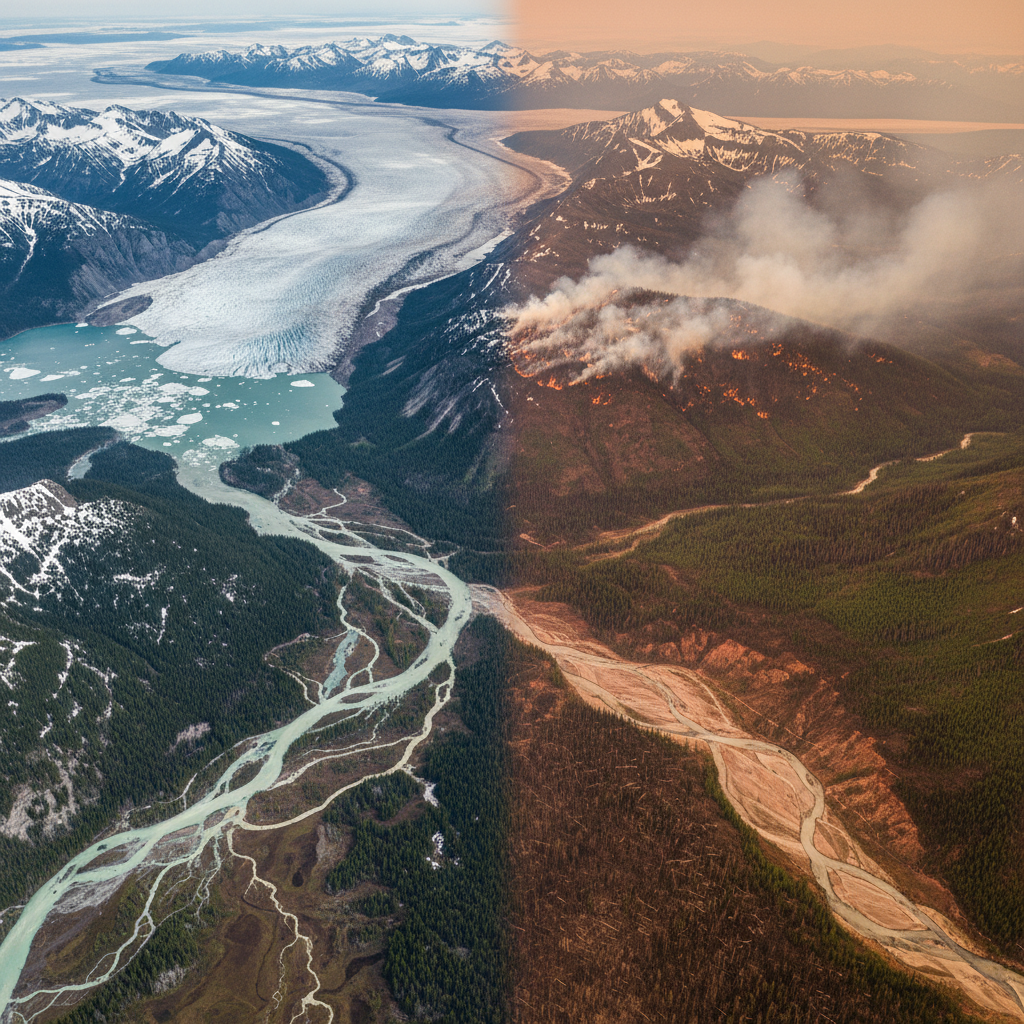
Environment and Climate Change Canada released its second edition of Canada's Changing Climate Report 2026 on September 3, warning that the country faces at least 3.5°C and potentially up to 5°C of warming above pre-industrial levels by the end of the century under existing climate policies. The federal assessment, prepared by more than 100 experts from government and academia, concludes Canada has already warmed about 2°C over the past 75 years.
The report documents that northern regions have experienced even more dramatic temperature increases, warming by roughly 2.6°C due to human-caused greenhouse gas emissions. This warming trajectory locks in more severe wildfire seasons, extreme heat events, rising sea levels, and shrinking snow and ice coverage across the country.
Scientists Sound Alarm on Accelerating Changes
The five-year scientific assessment represents the most comprehensive analysis of climate impacts facing Canadian communities. More than 100 climate experts contributed to the report, which serves as the foundation for understanding how rapidly changing conditions will affect infrastructure, emergency preparedness, and land-use planning decisions.
The report's projections extend beyond simple temperature increases. Scientists warn that the 3.5°C to 5°C warming range will fundamentally alter Canada's landscape, forcing communities to confront unprecedented challenges in wildfire management, coastal protection, and water security. The assessment details how warming patterns vary significantly across regions, with Arctic communities facing the most dramatic shifts in their local environments.
Climate researchers noted that the 2°C of warming already experienced represents the fastest rate of temperature change in Canada's recorded history. The report emphasizes that this warming has accelerated particularly over the past three decades, with the most recent 30-year period showing temperature increases at nearly double the global average.
Urgent Calls for Policy Response
Climate researchers and advocacy groups responded to the report by demanding faster emissions cuts and expanded adaptation measures to avoid the worst impacts outlined in the assessment. The scientific community emphasized that current global and domestic climate policies remain insufficient to prevent the most severe consequences.
Environmental organizations across Canada called the report a "wake-up call" that should prompt immediate action from all levels of government. Several climate policy experts argued that the projected warming scenarios require Canada to accelerate its timeline for achieving net-zero emissions and dramatically expand funding for climate adaptation infrastructure.
The report's findings have prompted renewed discussions about the pace of Canada's climate action, with experts arguing that the projected warming scenarios require immediate policy interventions rather than gradual adjustments to existing frameworks. Climate economists suggested that the cost of inaction far exceeds the investment needed for rapid decarbonization and comprehensive adaptation planning.
National Adaptation Strategy Takes Centre Stage
Environment and Climate Change Canada positioned the report as a critical tool for guiding resilience planning and implementing Canada's National Adaptation Strategy. The assessment urges governments, businesses, and communities to integrate climate risk assessments into all major infrastructure decisions.
The report emphasizes that adaptation planning can no longer treat climate change as a distant threat. With 2°C of warming already locked in and potentially 5°C on the horizon, Canadian communities must redesign their approaches to everything from building codes to emergency response protocols.
Federal officials stressed that the report provides the scientific foundation needed for evidence-based adaptation planning, offering detailed regional projections that local governments can use to assess their specific vulnerabilities and develop targeted responses. The assessment includes specific guidance for sectors ranging from agriculture and forestry to transportation and energy infrastructure.
The report also highlights the disproportionate impacts on Indigenous communities, particularly those in northern regions where traditional ways of life depend on stable ice conditions and predictable seasonal patterns. Federal officials acknowledged that adaptation strategies must account for these unique vulnerabilities and support community-led solutions.
Local Communities Face Immediate Planning Challenges
The report's implications extend directly to municipal and provincial planning departments, which now must incorporate the possibility of 5°C warming into long-term infrastructure investments. This includes reconsidering the lifespan and design specifications for bridges, roads, water treatment facilities, and housing developments.
Communities across Canada will need to evaluate their current emergency preparedness systems against the report's projections of more frequent and intense extreme weather events. The assessment suggests that existing disaster response capabilities may prove inadequate for the scale of challenges anticipated under higher warming scenarios.
Municipal leaders in several provinces have already begun reviewing their climate adaptation plans in light of the report's findings. Cities like Vancouver, Toronto, and Montreal are examining how the projected temperature increases will affect their urban heat island effects, stormwater management systems, and public health emergency protocols.
The report also addresses economic implications, noting that climate damages could reduce Canada's GDP by several percentage points by mid-century if adaptation measures prove insufficient. Insurance industry representatives have called for updated building codes and zoning regulations that reflect the report's temperature projections and extreme weather forecasts.
The government's official announcement emphasized that the report provides essential scientific evidence for communities developing climate resilience strategies.
As Canadian communities digest these projections, the report serves as both a warning and a planning tool, offering the scientific foundation needed to build resilience against a climate future that may arrive sooner and more intensively than previously anticipated. The challenge now lies in translating these scientific projections into concrete adaptation measures that can protect communities from the most severe impacts of a rapidly warming climate.