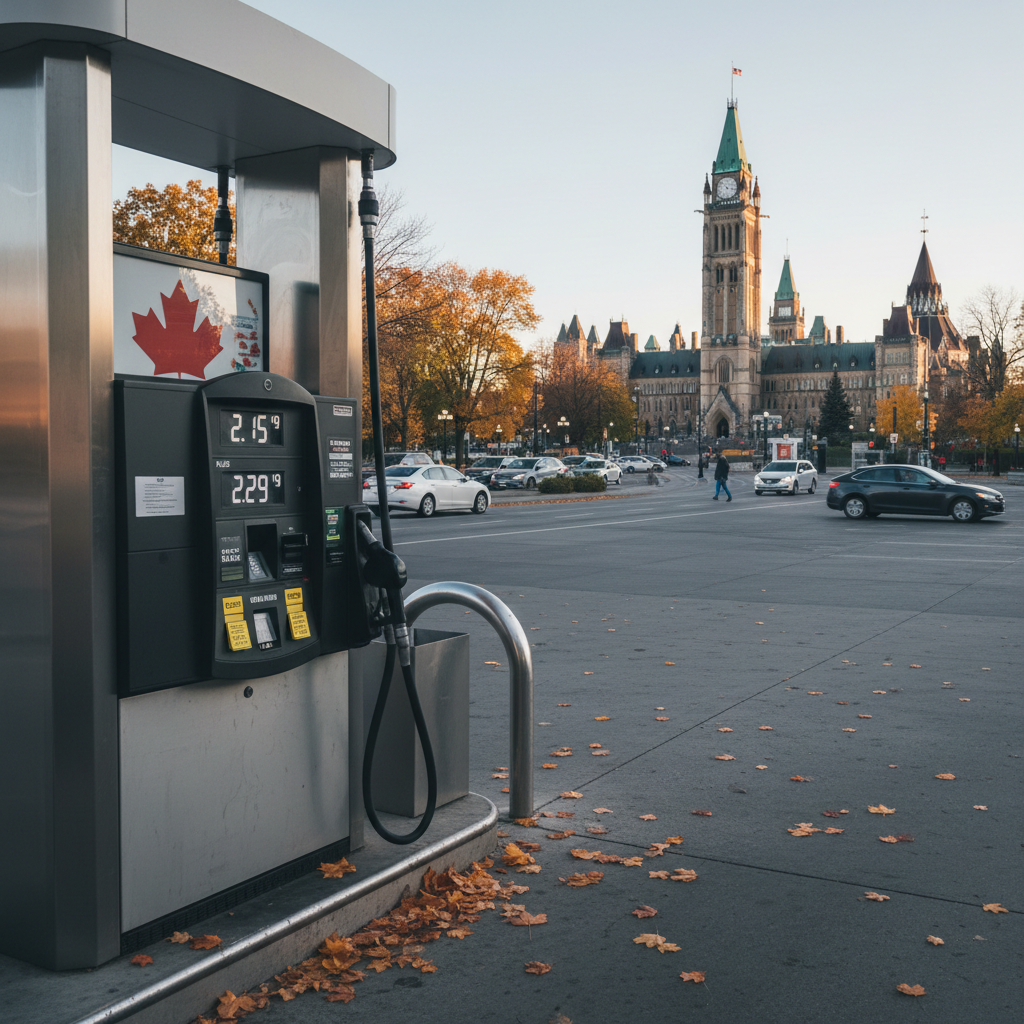
Finance Minister François-Philippe Champagne announced September 2nd that the federal government will extend its temporary suspension of excise taxes on gasoline, diesel and aviation fuels until January 31, 2027, prolonging a cost-of-living measure that has become central to the Liberal government's affordability messaging.
The extension maintains the zero excise tax rate on affected fuels for an additional four months beyond the original timeline. Beginning February 1, 2027, the excise tax will return at 50% of its regular rate until March 31, 2027, before fully resuming on April 1, 2027.
Savings and implementation details
The continued suspension represents savings of up to roughly 10 cents per litre on gasoline and 4 cents per litre on diesel for consumers, according to government communications. Aviation fuel costs also receive relief under the extended measure.
The Department of Finance Canada released technical notices alongside the announcement, detailing how inventory and import timelines are treated under the temporary rate reduction regime. The policy update formalizes the extension that was first implemented in April 2026 as part of the government's broader cost-of-living relief package.
Fuel retailers must continue tracking inventory purchased during the relief period and apply appropriate tax rates based on acquisition dates. The technical guidance addresses cross-border fuel purchases and ensures consistent application across different supply chain scenarios.
Political timing and opposition response
The announcement comes as Parliament prepares to resume sitting later this month, positioning fuel tax relief as a key talking point in what promises to be an intense fall session. Conservative critics have consistently argued that temporary tax relief measures create uncertainty for businesses and consumers while failing to address underlying inflationary pressures.
Conservative finance critic Pierre Poilievre has repeatedly called the Liberal approach "economic incompetence," arguing that permanent tax reductions would provide greater certainty for Canadian families planning their budgets. His party has promised to eliminate the federal carbon tax entirely if elected, positioning fuel affordability as a central campaign issue.
New Democratic Party finance critic Daniel Blaikie has previously called for permanent reductions to fuel taxes, arguing that temporary measures force Canadians to plan around uncertain timelines. The NDP has also pushed for windfall profit taxes on oil companies to fund additional consumer relief measures.
The Bloc Québécois has supported fuel tax relief but has pushed for additional measures targeting home heating costs specifically. Bloc leader Yves-François Blanchet has argued that Quebec's unique energy profile requires tailored federal support beyond gasoline and diesel relief.
Broader affordability strategy context
The fuel excise tax suspension forms part of a larger Liberal affordability strategy that includes enhanced Canada Child Benefit payments, dental care expansion, and targeted rental assistance programs. Finance officials have indicated that the gradual phase-out approach allows the government to monitor economic conditions while maintaining fiscal flexibility.
Provincial governments have taken varying approaches to fuel tax relief, with some maintaining their own temporary suspensions while others have opted for permanent rate reductions. Alberta suspended its provincial fuel tax indefinitely in 2022, while Ontario maintained a temporary reduction that expired earlier this year. The federal extension ensures consistency across jurisdictions regardless of provincial policy choices.
Industry associations representing trucking and aviation sectors have welcomed the extension, citing continued supply chain pressures and elevated operating costs. The Canadian Trucking Alliance has advocated for longer-term certainty around fuel tax policy to support fleet planning and route optimization.
The Canadian Federation of Independent Business has expressed mixed reactions, with some members appreciating immediate cost relief while others prefer permanent policy changes that enable long-term business planning. Small business owners in transportation-dependent sectors have particularly benefited from the reduced fuel costs.
Fiscal implications and future outlook
The extended relief comes as the federal government faces pressure to balance affordability measures with deficit reduction commitments. The Parliamentary Budget Officer estimated that the original fuel tax suspension cost the federal treasury approximately $2.5 billion annually in foregone revenue.
Opposition parties are expected to use the fall parliamentary session to challenge the government's fiscal management, particularly around temporary versus permanent tax policy changes. The Conservative Party has signaled it will force votes on permanent fuel tax elimination, setting up potential confidence votes that could trigger an early election.
The phased return of excise taxes beginning in February 2027 reflects government concerns about revenue impacts while maintaining political flexibility ahead of the next federal election. Finance officials have indicated they will monitor fuel price volatility, inflation trends, and broader economic indicators when determining final policy after April 2027.
Consumer advocacy groups have called for transparency around the criteria that will guide future decisions on excise tax levels beyond April 2027. The Canadian Taxpayers Federation has demanded permanent elimination of federal fuel excise taxes, arguing that temporary measures amount to political manipulation of tax policy.
According to the Department of Finance Canada release, officials will continue monitoring fuel price trends and economic conditions as the phase-out period approaches.
The extension sets up a potential election-year debate over tax policy permanence, with parties likely to stake out distinct positions on long-term fuel tax rates. Economic analysts suggest the timing creates maximum political leverage while minimizing immediate fiscal impact, positioning fuel affordability as a defining issue for the next federal campaign.