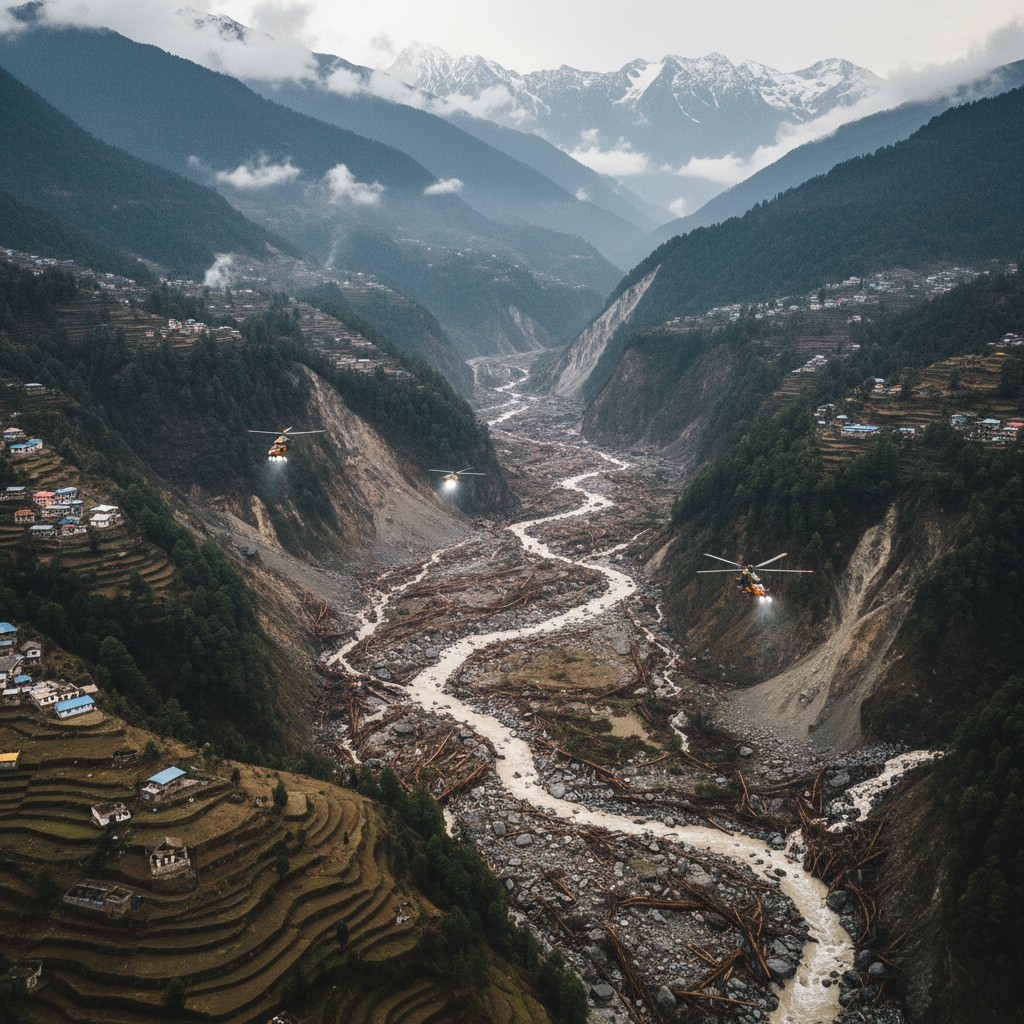
Thirty-two Canadians remain missing after a catastrophic flash flood tore through Nepal's Timure region this week, leaving families across Metro Vancouver and the rest of Canada desperately searching for information about their loved ones.
The disaster has confirmed at least 579 deaths and left nearly 2,000 people still unaccounted for as of Thursday, with Canadian officials working to verify the status of missing nationals. No Canadian deaths have been confirmed at this point, though the situation remains fluid as rescue operations continue in the remote mountainous area.
Canadian Families Appeal for Information
The crisis has prompted urgent appeals from Canadian families who lost contact with relatives travelling in the affected region. Metro Vancouver communities with significant Nepalese populations have mobilized to share information and coordinate search efforts through social media and community networks.
Canadian consular services are working with Nepalese authorities to account for the missing nationals, though communication challenges in the flood-damaged area have complicated verification efforts. The remote location of Timure, near the Tibet border, has made rescue and communication operations particularly difficult.
Community leaders in Surrey and Richmond, home to large Nepalese-Canadian populations, have established informal coordination centres where families can share information about missing relatives. Local temples and community centres have become gathering points for worried families seeking updates and mutual support during the crisis.
Disaster Unfolds Rapidly
The flash flood struck with little warning, transforming the normally manageable waterways in the Timure region into torrential flows that swept away buildings, vehicles, and people. The mountainous terrain that makes the area popular with trekkers and adventure tourists also contributed to the severity of the flooding as water channelled rapidly through narrow valleys.
Weather conditions in the region had deteriorated rapidly in the days leading up to the disaster, with heavy monsoon rains saturating the already unstable terrain. Local infrastructure, including roads and communication networks, suffered extensive damage that has hampered both rescue efforts and the flow of information to worried families abroad.
The timing of the disaster coincided with peak trekking season in the region, when many international visitors typically traverse the area en route to higher altitude destinations. This seasonal factor likely contributed to the number of foreign nationals, including Canadians, who were present when the flooding began on August 28.
International Response Mobilizes
Nepal's government has requested international assistance as the scale of the disaster became clear, with neighbouring countries and international organizations preparing to deploy search and rescue teams. The Canadian government has indicated it stands ready to provide consular assistance and support evacuation efforts for any Canadian nationals found in the affected area.
The Timure region's proximity to major trekking routes means the missing include both local residents and international visitors who were in the area when the flooding began. Rescue teams face significant logistical challenges reaching remote areas where survivors may be stranded without communication.
India has already deployed helicopter rescue teams to assist with search operations, while China has offered technical assistance given the disaster's proximity to the Tibet border. International aid organizations are coordinating relief supplies, though access remains severely limited due to damaged transportation infrastructure.
Search Efforts Continue
Nepalese authorities continue expanding search operations as weather conditions improve, though the extensive debris and altered landscape have made locating missing persons extremely challenging. Search teams report finding evidence of temporary shelters in some areas, raising hopes that survivors may have found refuge in higher ground.
Canadian consular officials are maintaining regular contact with Nepalese authorities and have established communication channels for families seeking information about missing relatives. The government has advised that verification of casualties and missing persons will likely take several more days as search teams reach previously inaccessible areas.
Families waiting for news have been urged to contact Global Affairs Canada's emergency watch and response centre, which is coordinating the Canadian response to the disaster and maintaining updated lists of nationals in the affected region. According to CBC reporting, the situation developed rapidly over the course of August 28-29 as the full extent of Canadian involvement became apparent.
Weather forecasts indicate improving conditions for the remainder of the week, potentially allowing expanded aerial search operations and better access to remote valleys where survivors might be located. Nepalese officials expect to provide more definitive casualty figures as communication links are restored to affected communities.