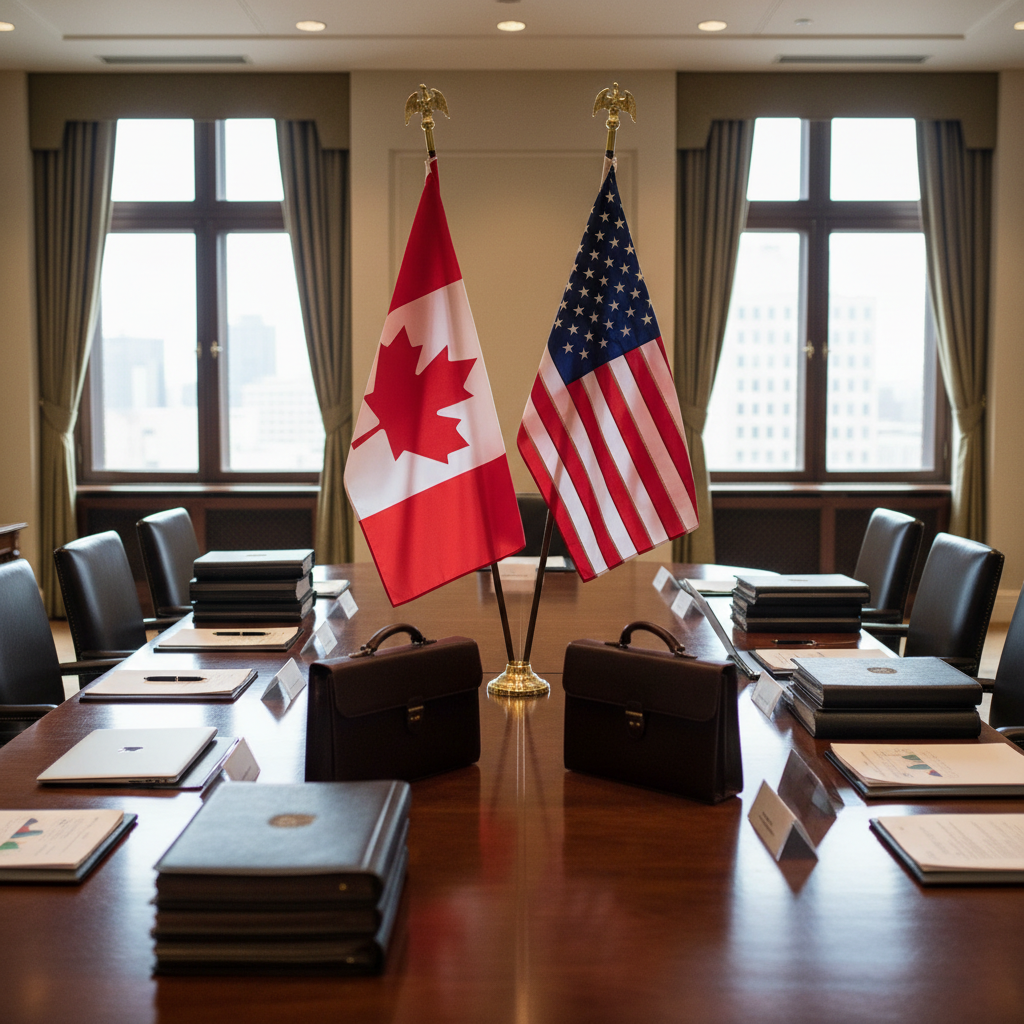
Canadian and U.S. negotiators are racing against time to finalize a trade agreement before an August 21 deadline that could trigger new American tariffs on nearly $30 billion worth of Canadian goods. The high-stakes talks have intensified in recent days as both sides push to avoid what could become one of the most significant trade disruptions between the two countries in recent years.
Prime Minister Mark Carney has been actively engaging with provincial premiers, pressing them to prepare retaliatory measures including the removal of U.S. alcohol products from provincial shelves as part of a broader trade response strategy. The federal government's coordination with provinces signals the seriousness of the potential economic fallout if negotiations fail.
Growing Concerns Over Tariff Implementation
Canadian negotiators have begun expressing fears that the tariffs might be unavoidable despite ongoing diplomatic efforts. Sources close to the negotiations indicated on August 16 that the complexity of outstanding issues may prevent a comprehensive deal from being reached before the deadline. The potential tariffs would affect a wide range of Canadian exports, from natural resources to manufactured goods, representing a substantial portion of cross-border trade.
The $30 billion figure represents one of the largest single tariff packages that could be imposed on Canadian goods, affecting industries across multiple provinces. Exporters in sectors ranging from forestry to agriculture are closely monitoring the negotiations, as the tariffs could significantly impact their competitiveness in the crucial U.S. market.
Last-Minute Diplomatic Push
Despite the mounting concerns, both Ottawa and Washington continued pushing for a last-minute agreement as of August 18. Officials from both countries have been working extended hours to bridge remaining gaps in the negotiations, with multiple rounds of talks taking place throughout the week leading up to the deadline.
The diplomatic efforts have involved senior trade officials from both governments, with regular communication between Prime Minister Carney's office and senior U.S. administration officials. The talks have focused on addressing specific trade irritants that have been building tension between the two countries over recent months.
Provincial Preparation for Retaliation
The Prime Minister's outreach to provincial premiers represents a coordinated approach to potential trade retaliation. The proposed removal of U.S. alcohol from provincial shelves would mark a significant escalation in trade tensions, as alcohol sales represent a substantial revenue stream for provincial governments and a visible consumer impact.
Provincial liquor boards across Canada have been quietly preparing contingency plans for such measures, though implementation would require careful coordination to avoid disrupting existing contracts and supply chains. The alcohol sector represents just one potential target for retaliatory measures, with provinces also considering impacts on other U.S. consumer goods.
Economic Stakes and Market Impact
The potential tariffs come at a time when Canadian exporters are already facing various global trade challenges. The $30 billion in affected goods represents a significant portion of Canada's annual exports to the United States, which totaled over $400 billion in recent years. Industries that could be particularly hard hit include lumber, energy products, and agricultural commodities.
Financial markets have been closely watching the negotiations, with the Canadian dollar experiencing volatility as traders assess the likelihood of a deal being reached. Export-dependent companies have been preparing for various scenarios, including potential supply chain adjustments and pricing changes if tariffs are implemented.
The trade dispute has also raised broader questions about the stability of North American trade relationships, particularly given the integrated nature of supply chains between the two countries. Many Canadian businesses operate on thin margins when exporting to the U.S., making them particularly vulnerable to additional tariff costs.
Outlook for Final Hours
With the August 21 deadline approaching rapidly, negotiators face intense pressure to resolve outstanding issues. The final 48 hours before the deadline are expected to be crucial, with both sides needing to make significant compromises to reach an agreement. Trade experts suggest that even a partial deal could help reduce the scope of potential tariffs, though a comprehensive agreement remains the preferred outcome for both countries.
The negotiations have highlighted the ongoing challenges in managing the complex trade relationship between Canada and the United States, according to CBC coverage of the talks. If no deal is reached by the deadline, the implementation of tariffs could mark the beginning of a prolonged period of trade uncertainty affecting businesses and consumers on both sides of the border.