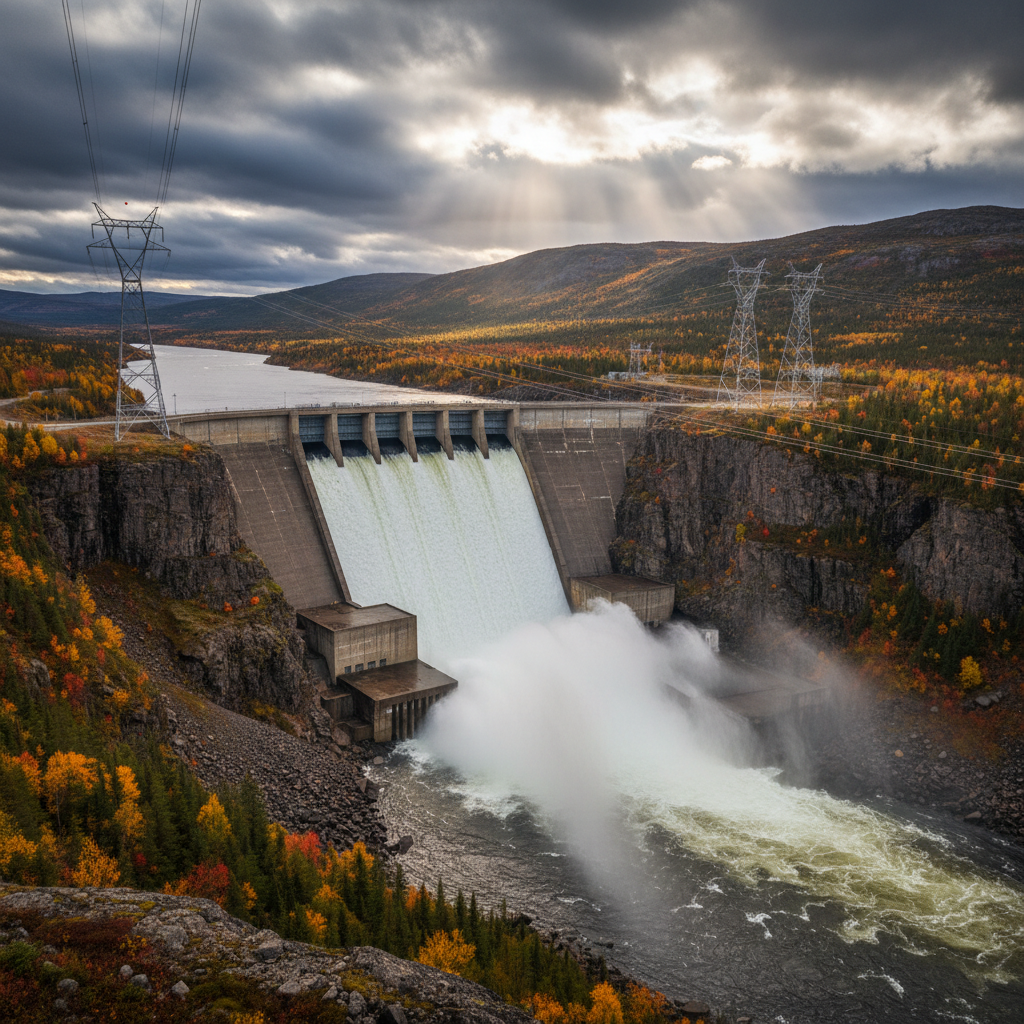
Quebec and Newfoundland and Labrador have reached a landmark agreement on the Churchill Falls hydroelectric project, with the deal announced August 17 marking a significant shift in the provinces' decades-long energy relationship. The arrangement grants Newfoundland and Labrador transmission access of 985 megawatts through Quebec's power grid, enabling the Atlantic province to sell electricity to other markets for the first time in generations.
Prime Minister Mark Carney announced $10 billion in federal support as part of the broader energy deal, underscoring Ottawa's commitment to reshaping Canada's hydroelectric sector. The federal financing package represents one of the largest energy infrastructure investments in recent Canadian history.
Breaking decades of energy isolation
The transmission access component fundamentally alters Newfoundland and Labrador's position in North American energy markets. Under the new framework, the province can bypass Quebec's traditional role as sole intermediary for Churchill Falls power, opening direct pathways to customers in the Maritimes and northeastern United States.
The 985-megawatt transmission capacity represents substantial export potential for Newfoundland and Labrador, which has long sought greater control over its hydroelectric resources. Churchill Falls generates 5,428 megawatts at full capacity, making it one of the largest underground power stations in the world. The facility's current output could power approximately 4 million homes, yet Newfoundland and Labrador has been unable to capitalize on market demand due to transmission constraints.
Industry analysts note the transmission access removes a critical bottleneck that has prevented the province from participating in lucrative spot markets during peak demand periods. Winter electricity prices in New England regularly exceed $100 per megawatt-hour, compared to the fixed rates Newfoundland receives under existing Churchill Falls contracts.
Federal backing signals energy priorities
Carney's $10 billion commitment positions the Churchill Falls agreement within broader federal climate and economic strategies. The funding package supports both infrastructure upgrades and long-term operational frameworks between the two provinces, with specific allocations for transmission line enhancements and grid modernization projects.
The federal involvement reflects Ottawa's recognition that interprovincial energy disputes have historically limited Canada's hydroelectric potential. By backing the Quebec-Newfoundland arrangement, the federal government aims to unlock Atlantic Canada's role in continental clean energy markets while advancing national emissions reduction targets.
Federal officials indicated the Churchill Falls investment aligns with Canada's commitment to achieve net-zero emissions by 2050, positioning hydroelectric exports as a cornerstone of the country's clean energy strategy. The deal also supports federal objectives to strengthen east-west energy corridors and reduce regional economic disparities.
Historical context of Churchill Falls disputes
The Churchill Falls project has been a source of interprovincial tension since the original 1969 agreement, which locked Newfoundland and Labrador into selling virtually all the facility's power to Quebec at fixed rates until 2041. That deal, signed when electricity prices were far lower, has generated billions in revenue for Quebec while leaving Newfoundland and Labrador with minimal returns on its natural resource.
Previous attempts to renegotiate Churchill Falls arrangements have failed, with Quebec maintaining its contractual advantages and Newfoundland and Labrador pursuing unsuccessful legal challenges. The Supreme Court of Canada upheld Quebec's position in multiple rulings, reinforcing the binding nature of the original contract despite dramatically changed market conditions.
The new agreement represents the first major breakthrough in these negotiations in over five decades, according to CBC reporting on the deal. Political observers describe the arrangement as a rare example of successful federal mediation in interprovincial resource disputes.
Economic implications for Atlantic Canada
The transmission access provisions could generate hundreds of millions in annual revenue for Newfoundland and Labrador, fundamentally improving the province's fiscal position. Direct market access allows the province to capture higher electricity prices during peak demand periods, particularly in winter months when heating drives up consumption across the region.
Economic projections suggest the deal could add $200-300 million annually to provincial revenues once full transmission capacity becomes operational. This revenue stream would provide crucial fiscal flexibility for a province that has struggled with debt burdens and limited economic diversification options.
The deal also positions Newfoundland and Labrador as a potential clean energy supplier to New England states, which are actively seeking renewable electricity sources to meet climate targets. The 985-megawatt transmission capacity could support long-term export contracts worth billions over the coming decades, with Massachusetts and Connecticut identified as priority markets.
For Quebec, the agreement maintains its central role in regional energy transmission while addressing longstanding political pressure over Churchill Falls. The arrangement preserves Quebec's transmission infrastructure advantages while creating new partnership opportunities with its Atlantic neighbour, potentially opening doors for joint development of additional hydroelectric projects in Labrador.
Implementation of the transmission access is expected to begin in 2025, with full capacity available by 2028. The timeline allows both provinces to prepare grid infrastructure and negotiate initial export contracts with Maritime and New England customers.