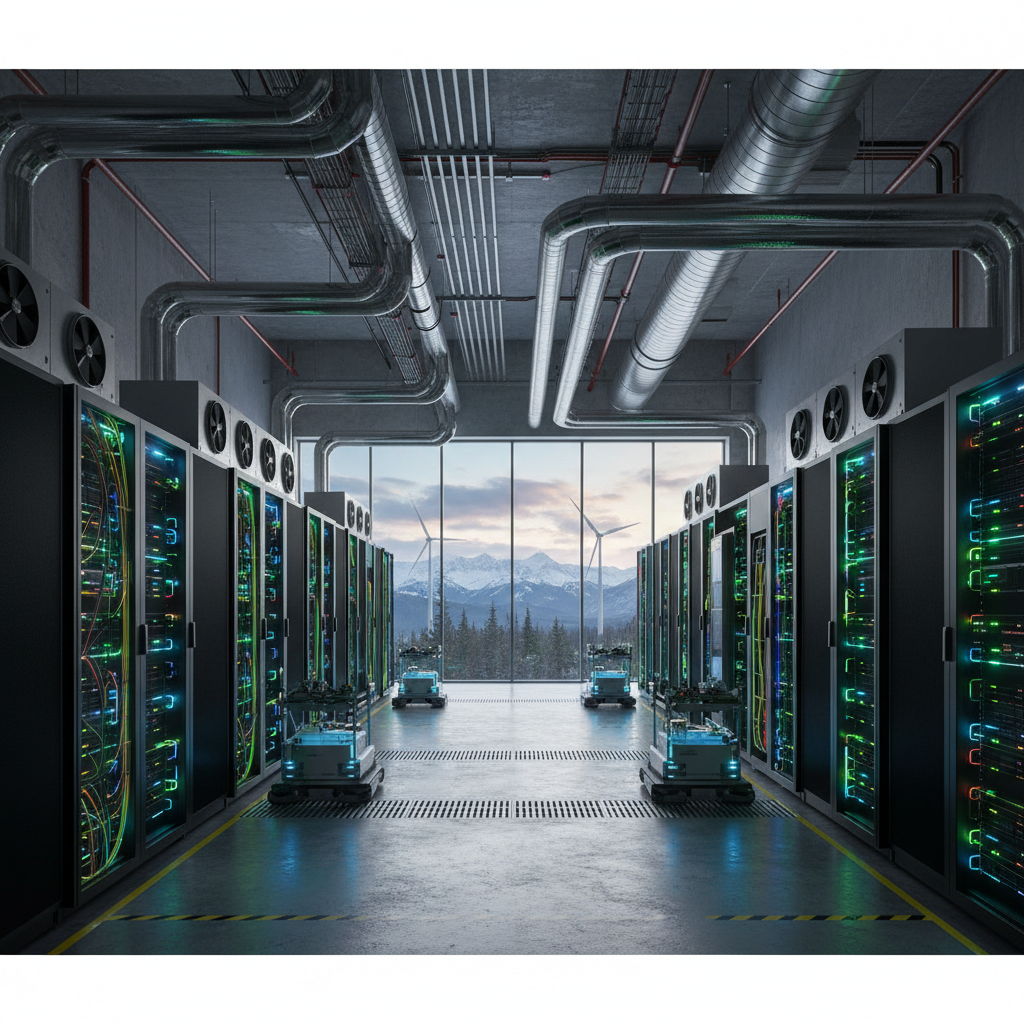
Canada is preparing for a surge in hyperscale artificial intelligence data centres, with new facilities expected to deliver economic benefits and strengthen the country's tech independence while sparking debate over power consumption and community effects. The federal government's push comes as part of a broader effort to accelerate domestic industrial capacity, including a $100 million program announced August 8 to subsidize Canadian steel shipping costs.
Data Centre Expansion Plans Take Shape
The hyperscale AI data centre buildout represents Ottawa's latest move to establish what officials are calling "tech sovereignty" — reducing reliance on foreign infrastructure for critical computing needs. These massive facilities, designed to handle the intensive processing requirements of artificial intelligence systems, are expected to create construction jobs and ongoing technical employment across multiple provinces.
The timing aligns with the federal steel shipping subsidy, which will cover half the cost of transporting Canadian steel by rail and water. Industry observers see both initiatives as connected efforts to strengthen domestic supply chains and manufacturing capacity while positioning Canada as a regional hub for AI development. The data centres will require substantial steel construction for server housing, cooling infrastructure, and electrical systems, making the shipping subsidy directly relevant to project costs.
Federal officials have identified several potential sites across Ontario, Quebec, and British Columbia, with proximity to existing electrical grid infrastructure being a key selection criterion. The facilities are expected to house thousands of high-performance computing units capable of training large language models and running complex AI applications for both government and private sector clients.
Power Grid Strain Raises Local Opposition
The data centre expansion faces growing resistance from communities concerned about electricity demands and infrastructure strain. Hyperscale facilities typically require enormous amounts of power for both computing operations and cooling systems, potentially affecting local grid stability and energy costs for residential users.
Community groups have raised questions about whether existing electrical infrastructure can support the additional load without compromising service reliability or driving up utility rates. The debate reflects broader tensions between national economic priorities and local quality-of-life concerns as governments push to build large-scale industrial projects.
Municipal councils in several proposed locations have expressed concerns about the facilities' impact on local services and traffic patterns. Some communities worry that the industrial nature of data centres will provide fewer direct employment opportunities than other economic development projects while placing greater demands on public infrastructure. Electrical utility companies have begun conducting grid capacity assessments to determine what upgrades would be necessary to support the additional load.
Environmental groups have also raised concerns about water usage for cooling systems, particularly in regions already facing water supply challenges. The facilities' continuous operation means they cannot easily reduce consumption during peak demand periods or drought conditions.
Economic Benefits Versus Environmental Impact
Proponents argue the data centres will generate significant economic activity through construction contracts, permanent technical jobs, and spin-off business opportunities. The facilities are also expected to attract additional tech companies seeking proximity to high-performance computing resources, potentially creating innovation clusters in participating regions.
However, environmental advocates worry about the carbon footprint of power-intensive operations, particularly in provinces still reliant on fossil fuel electricity generation. The facilities' cooling requirements and 24/7 operations mean they consume electricity continuously, unlike many industrial operations that can adjust usage during peak demand periods.
The steel shipping subsidy adds another dimension to the infrastructure discussion, as domestic steel production for data centre construction could reduce transportation emissions while supporting Canadian manufacturing jobs. The $100 million program specifically targets rail and water transport, which typically have lower carbon footprints than trucking.
Economic impact studies suggest each hyperscale facility could generate between 200 and 500 permanent jobs, with construction phases employing additional workers for 18 to 24 months. The facilities are also expected to generate substantial property tax revenue for host municipalities, though some local officials question whether this will offset increased infrastructure maintenance costs.
Federal Strategy Balances Growth and Resistance
Ottawa's approach reflects the challenge of building critical infrastructure while managing local opposition. The government is framing the data centre boom as essential for maintaining Canada's competitive position in artificial intelligence development, particularly as other countries rapidly expand their own computing infrastructure.
The broader industrial strategy, including both AI facilities and steel industry support, suggests federal officials view domestic manufacturing and tech capacity as interconnected priorities. Government ministers have emphasized that Canadian-controlled AI infrastructure reduces dependence on foreign cloud services and protects sensitive data processing within national borders.
Federal procurement policies are being adjusted to prioritize Canadian-hosted AI services for government applications, creating a guaranteed customer base for the new facilities. This approach mirrors strategies used in other countries to build domestic tech capacity while ensuring data sovereignty for critical government operations.
According to CBC's business coverage, the initiatives represent part of a wider push to accelerate Canadian industrial development while addressing community concerns about large-scale projects. The government has indicated it will work with provincial utilities and municipal governments to address infrastructure challenges and ensure fair distribution of economic benefits.
The success of the data centre buildout will likely depend on how effectively governments can address power grid concerns and demonstrate tangible local benefits. With artificial intelligence demand continuing to grow globally, Canada's ability to balance rapid infrastructure development with community acceptance may determine its position in the emerging AI economy. Industry analysts expect the first facilities to begin construction within 12 months, with initial operations starting by late 2025.