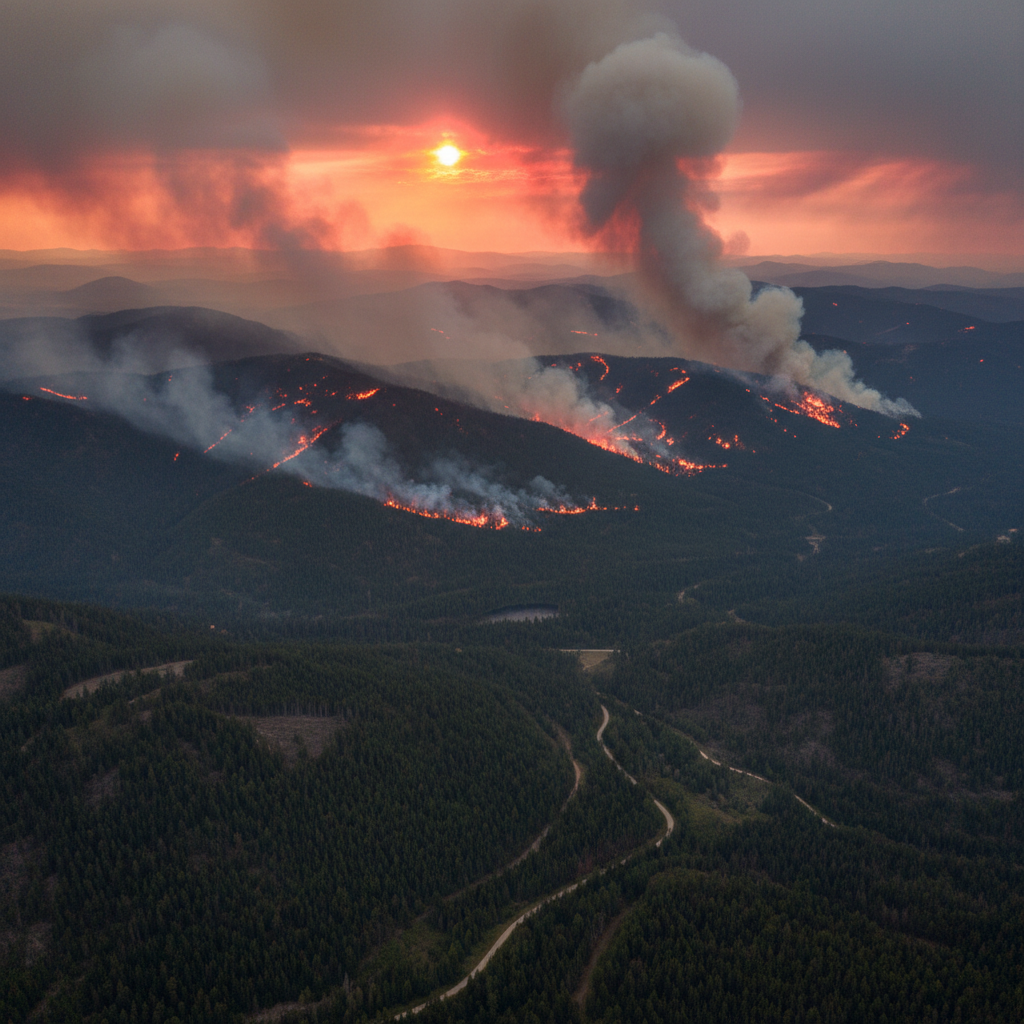
The British Columbia government declared a provincial state of emergency on August 4, 2026, as fast-moving wildfires across the Interior and Northern regions forced thousands of residents to evacuate their homes. Provincial officials reported more than 100 active wildfires burning throughout the province, with several classified as 'wildfires of note' due to their size, aggressive behaviour and direct threat to communities.
Evacuation orders and alerts have been issued for areas around Prince George, Quesnel, the Cariboo and parts of the Okanagan Valley. Emergency reception centres have been established to provide immediate shelter and support for displaced residents fleeing the flames.
What the provincial emergency declaration means
The state of emergency grants the provincial government expanded powers to coordinate firefighting resources, manage evacuations and access federal assistance more quickly. Under the Emergency Program Act, officials can requisition private property for emergency use, control movement in affected areas and direct essential services where needed most urgently.
Provincial emergency management officials emphasized that the declaration allows for faster deployment of resources and streamlined decision-making as fire conditions deteriorate. The measure also enables British Columbia to formally request additional federal support, including Canadian Armed Forces personnel and equipment. The declaration remains in effect for 14 days unless extended or rescinded earlier, depending on how fire conditions evolve across the province.
This marks the third provincial emergency declaration related to wildfires in the past five years, highlighting the increasing frequency and severity of fire seasons in British Columbia. Previous declarations occurred during the devastating 2021 and 2023 fire seasons, when similar weather patterns and drought conditions created widespread destruction across multiple regions.
Federal and interprovincial support mobilizing
Federal agencies including the Canadian Armed Forces and firefighting crews from other provinces are either on standby or already providing assistance with firefighting operations and logistics support. The coordinated response reflects the scale of the emergency, with resources being pooled from across Canada to combat the widespread blazes.
Emergency reception centres have been activated in communities outside evacuation zones to house displaced residents. These facilities provide temporary accommodation, meals and basic necessities for families forced to leave their homes with little notice. The largest reception centre in Kamloops has capacity for 500 evacuees, while smaller facilities in Vernon and Williams Lake are accommodating additional displaced families.
Firefighting aircraft from Alberta and Saskatchewan have been deployed to assist BC Wildfire Service operations, bringing the total number of helicopters and air tankers working the fires to over 60 aircraft. Ground crews from Manitoba and Ontario are en route to provide additional personnel for containment efforts in the hardest-hit regions.
Dangerous conditions expected to continue
Premier and emergency management officials warned that hot, dry and windy weather conditions are forecast to persist throughout the week, creating ideal circumstances for rapid fire spread. The combination of low humidity, high temperatures and gusty winds has created what fire officials describe as extreme fire behaviour across multiple regions.
Environment and Climate Change Canada has issued heat warnings for much of the Interior, with temperatures expected to reach 35-40°C in many areas. Relative humidity levels are forecast to drop below 20 per cent during peak afternoon hours, while winds gusting up to 50 kilometres per hour could rapidly spread existing fires and spark new ones from any ignition source.
Officials urged all British Columbians to prepare for rapidly changing fire situations, even in areas not currently under evacuation orders. The volatile conditions mean new fires can ignite quickly and existing blazes can change direction or intensity with little warning. Fire behaviour analysts noted that several fires have grown by thousands of hectares within single 24-hour periods.
Residents advised to stay prepared and informed
Emergency officials are directing residents to monitor official channels for the latest evacuation orders and alerts, as the situation continues to evolve rapidly. Those in evacuation alert areas have been advised to prepare emergency kits, identify evacuation routes and be ready to leave at a moment's notice.
The BC Emergency Health Services has positioned additional ambulances and paramedic crews in communities near active fire zones to respond quickly to medical emergencies during evacuations. Highway maintenance crews are working around the clock to keep evacuation routes clear and safe for fleeing residents.
The provincial emergency underscores the ongoing challenges British Columbia faces during increasingly severe wildfire seasons. According to the CBC report, the current outbreak represents one of the most significant early-season fire emergencies in recent years, with fire activity typically not reaching these levels until later in August.
Communities across Canada are organizing support efforts for evacuated British Columbians, with donation drives and volunteer coordination efforts emerging in multiple provinces. The Red Cross and other relief organizations are accepting financial contributions to support immediate needs of displaced families and longer-term recovery efforts in affected communities. Insurance companies have activated emergency claims processing centres to help property owners begin damage assessments once it becomes safe to return to evacuated areas.