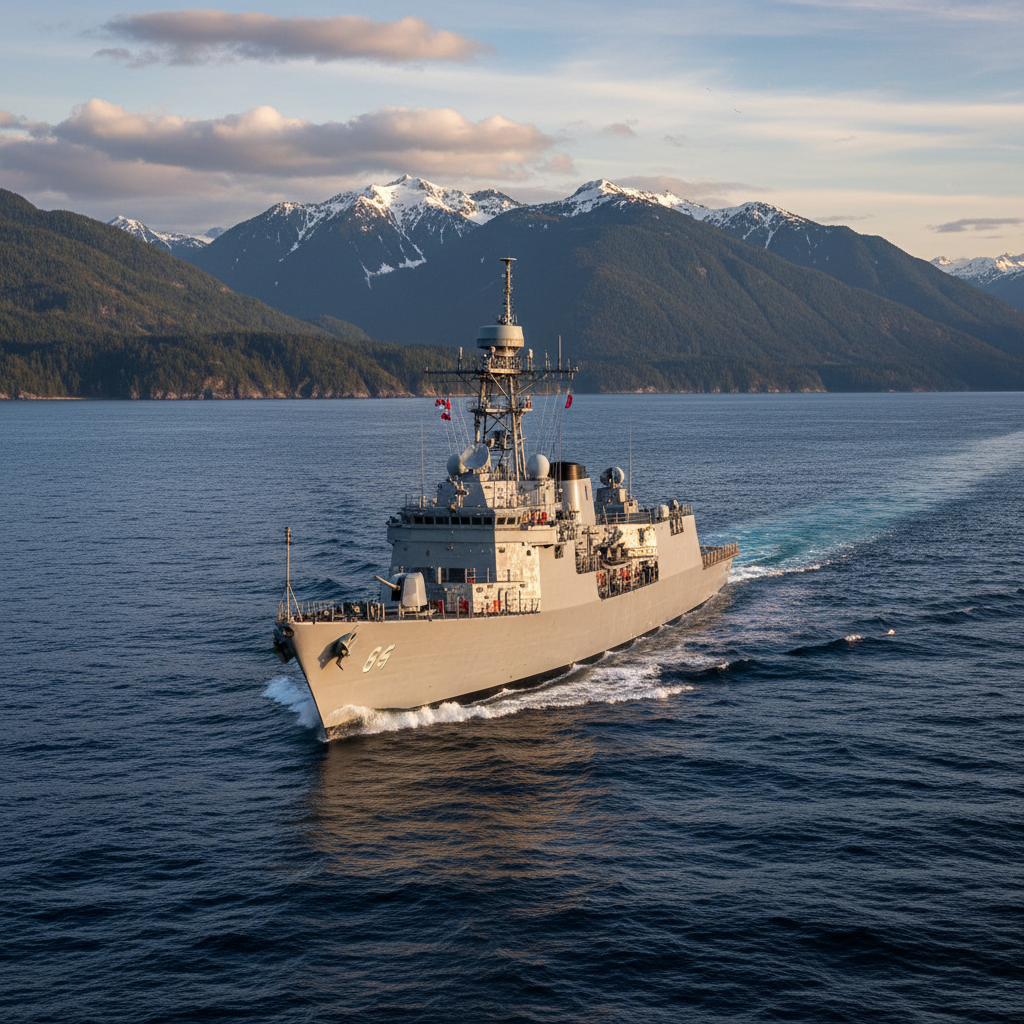
The federal government announced a $2.4-billion defence package on July 25 to dramatically expand Canada's naval presence in the Indo-Pacific over the next decade, responding to mounting security concerns over China's military buildup and instability in the South China Sea.
The comprehensive plan includes deploying an additional Royal Canadian Navy frigate to the region on a near-continuous basis, significantly increasing Canada's participation in joint military exercises with allies including Japan, Australia and the United States, and funding new intelligence and cyber capabilities specifically focused on the Pacific theatre.
Blair emphasizes response to regional security challenges
Defence Minister Bill Blair said the substantial investment directly addresses growing security challenges in one of the world's most strategically important regions. The minister emphasized that the package reinforces Canada's commitments under its broader Indo-Pacific Strategy, which has positioned the Pacific region as a key priority for Canadian foreign policy and defence planning.
"This investment is intended to respond to growing security challenges, including China's military buildup and instability in the South China Sea," Blair stated during the announcement, highlighting the government's recognition of shifting regional power dynamics that have prompted allied nations to reassess their Pacific commitments.
Enhanced allied cooperation and joint exercises
The defence package places significant emphasis on strengthening military cooperation with key Pacific allies through expanded joint exercises and training programs. Officials indicated that Canada's increased participation in multilateral military exercises with Japan, Australia and the United States will enhance interoperability between allied forces and demonstrate collective resolve in maintaining regional stability.
The plan's focus on joint exercises reflects growing international coordination among democratic allies concerned about China's assertive territorial claims in the South China Sea and broader military expansion across the Indo-Pacific region. These enhanced partnerships are expected to provide Canadian forces with valuable experience operating in Pacific conditions while contributing to allied deterrence efforts.
Intelligence and cyber capabilities expansion
Beyond traditional naval assets, the $2.4-billion package includes substantial funding for new intelligence gathering and cyber warfare capabilities tailored specifically for Pacific operations. These technological investments acknowledge the increasingly complex nature of modern security threats, which extend beyond conventional military confrontation to include cyber attacks, information warfare and sophisticated surveillance operations.
The cyber capabilities component represents a significant evolution in Canada's approach to Pacific security, recognizing that future conflicts in the region are likely to involve extensive digital warfare alongside traditional military operations. Officials have indicated these new capabilities will enhance Canada's ability to both defend against and respond to cyber threats originating from state and non-state actors in the region.
Implementation timeline and procurement challenges
Government officials indicated that initial deployments and capability upgrades would begin as early as 2027, though implementation remains subject to procurement timelines and military staffing requirements. The ambitious timeline reflects the government's urgency in responding to rapidly evolving regional security dynamics, while acknowledging the practical challenges of expanding naval operations across vast Pacific distances.
The procurement process for new equipment and technology will likely face the same delays that have historically affected Canadian defence acquisitions, potentially pushing some capabilities beyond the initial 2027 target date. Military officials will also need to address staffing challenges as the Royal Canadian Navy expands its operational commitments while maintaining existing Atlantic and Arctic responsibilities.
The announcement builds on Canada's existing Indo-Pacific Strategy and reflects growing recognition among Western allies that the Pacific region will define global security dynamics for decades to come, according to the CBC report on the defence package unveiling.
This substantial defence investment signals Ottawa's commitment to playing a more prominent role in Pacific security architecture, even as questions remain about Canada's capacity to sustain expanded operations across multiple theatres while addressing domestic defence priorities including Arctic sovereignty and NORAD modernization.